
Short answer: Businesses are moving to cloud phone systems because traditional copper lines are being retired and cost more to keep, because staff take calls from home and the road, and because one system can cover several offices. The switch goes smoothly when the network is checked first and the old lines feeding alarm panels, fax machines and card terminals are accounted for before cutover.
The reasons we actually hear
When a business in Smyrna, Franklin or Chattanooga calls us about phones, it is rarely because they read about new features. It is usually one of these:
- The landline bill keeps going up while the service stays the same. As carriers retire copper lines, the ones still in service tend to get more expensive.
- The old phone system in the closet failed, and replacement parts are hard to find.
- Half the team works from home part of the week, and calls to the main number go to a desk nobody is sitting at.
- A second office opened, and transferring a caller between locations means giving them another number to dial.
- The front desk misses calls at lunch because there is no auto attendant or ring group.
What changes with a cloud phone system
A cloud or VoIP phone system carries calls over your internet connection. Each person gets an extension that can ring a desk phone, a computer and a mobile app. Callers can be routed by department, time of day or location, and voicemail can land in email. Adding a new hire is a settings change rather than a new line from the carrier.
For a business with offices in Murfreesboro and Cleveland, for example, that means one phone system where a receptionist can transfer a caller to the other office with an extension instead of a separate number.
What trips up a switch
Most of a phone move is simple. These are the parts that cause trouble when nobody plans for them:
- The network. Choppy audio and dropped calls usually come from bandwidth, busy connections or switches that are not set to give voice priority, not from the phones.
- Forgotten lines. Alarm and fire panel communicators, elevator phones, fax machines and some credit card terminals may still use a copper line. Our guide to eliminating POTS lines covers how to trace and replace each one.
- Emergency location. Each phone needs an accurate address on file so a 911 call reaches the right place.
- Internet outages. Calls need a plan for forwarding to cell phones or another office when the connection is down.
Our VoIP vs. landline guide goes deeper on each of these.
How TechCore plans the move
TechCore sets up business IP phone service for companies across Middle Tennessee and the Chattanooga area. The process looks like this:
- We map how calls come in today, who answers and what should happen after hours.
- We check that your internet and network can carry voice cleanly before any phones go in.
- We set up extensions, call routing and voicemail, then move your existing numbers.
- Your team gets a short walkthrough, and our help desk supports changes after go-live.
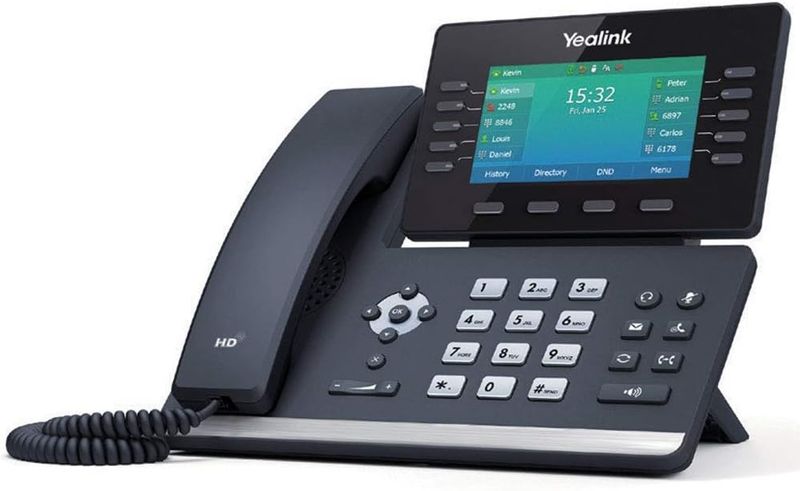
Desk phones come at no extra charge when you sign up for TechCore IP phone service.
Questions to ask before you switch
- Has anyone tested whether our current network can handle voice traffic?
- Which of our existing lines are connected to something other than a phone?
- Who handles moving our numbers, and how is downtime kept short?
- What happens to incoming calls if the internet goes out?
- Who do we call when we need to add a user or change a ring group?
Cloud phone FAQ
Do we need faster internet first?
Not always. We measure your connection and network during the assessment. Some offices need more bandwidth or a backup connection for voice, and many already have enough.
Who makes changes after go-live?
Our help desk. Adding a user, changing a ring group or updating after-hours routing is a support request, not a new project.
Will our alarm keep working?
It needs a new communication path, such as cellular or internet. Turner Security can update the alarm or fire panel as part of the same project.
Still paying for copper lines?
Have someone list every line you are paying for and what is plugged into it. That alone usually shows what a switch would involve. Call TechCore at (615) 237-5700 and we will review your lines, call flow and network during a free assessment, then send a written proposal.